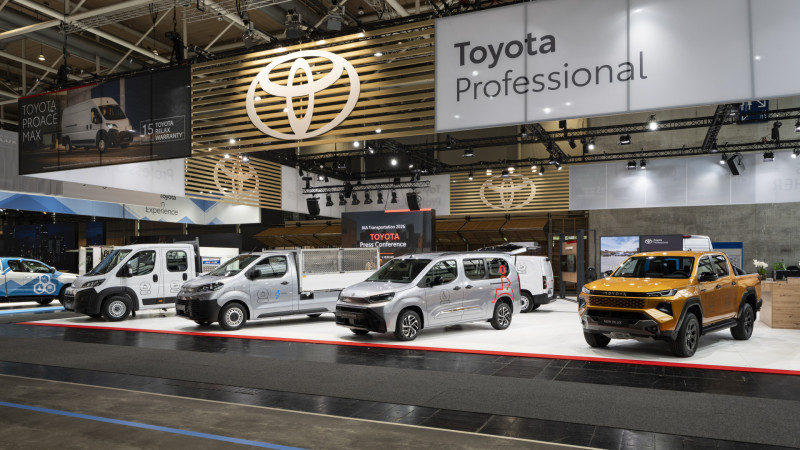
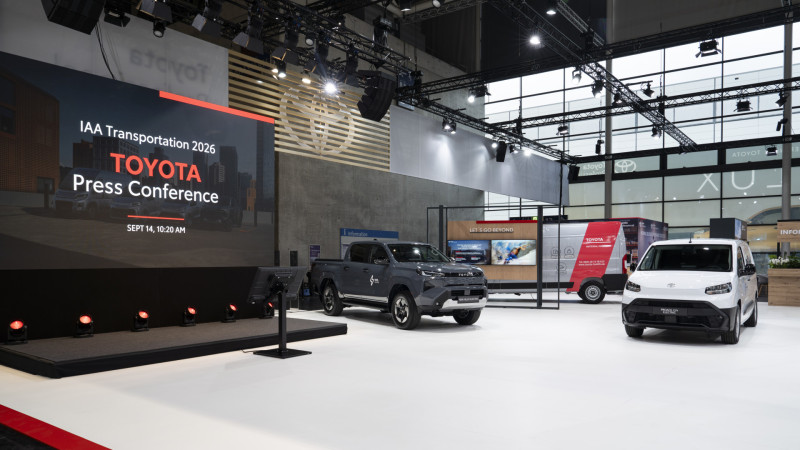
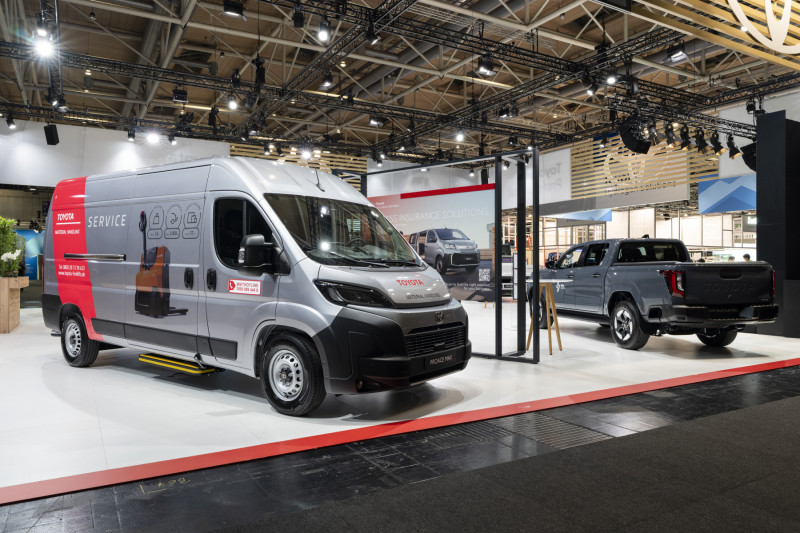
Toyota targets further LCV market growth with quality, service and choice
- Toyota states its ambition for 200,000 annual LCV sales and an 8% market share in Europe by 2030 at IAA Transportation Hannover
- European sales and market share have more than doubled in the past five years
- Battery electric models across the entire LCV range, including the all-new Hilux BEV
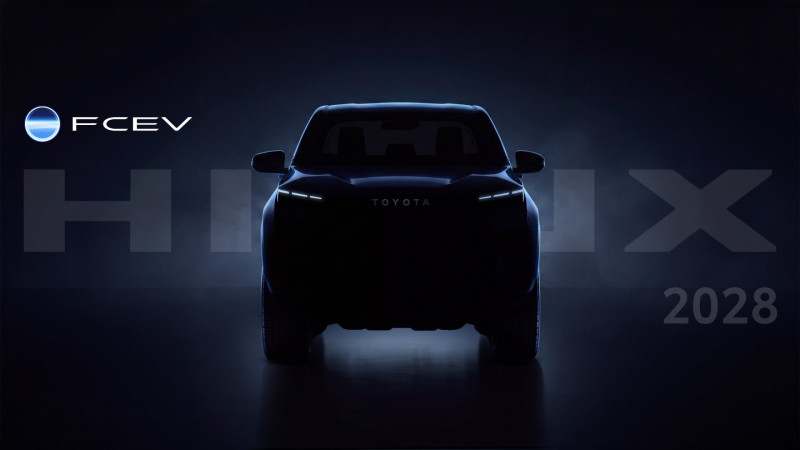
- Hydrogen fuel cell electric Hilux announced for production in 2028
- Multi-path approach ensures customers can choose the right powertrain technology for their business needs
- Customers supported by a network of more than 500 Toyota Professional specialist dealerships across Europe
- Expansion of factory and local vehicle conversion network across all markets, working to Toyota-certified standards
- Focus on customer service, with a one-stop-shop for tailor-made Toyota finance, insurance, fleet and leasing products
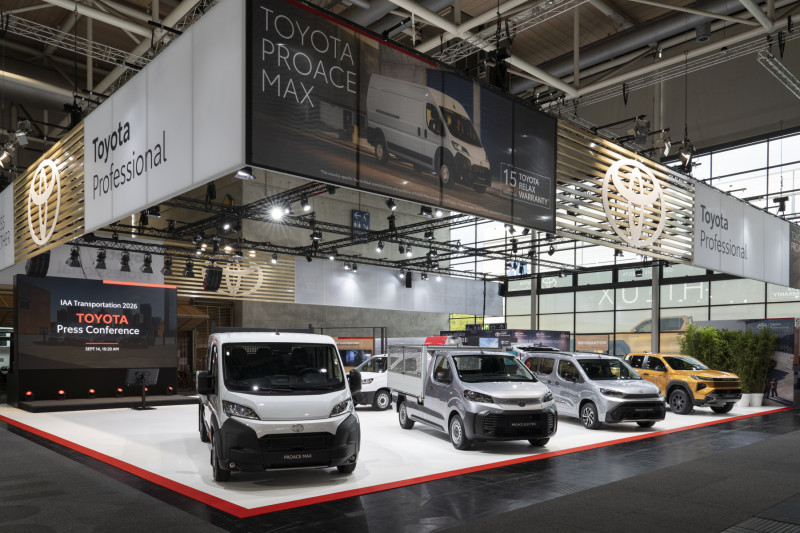
The strength and success of Toyota’s European light commercial vehicle (LCV) business was highlighted at IAA Transportation in Hannover, Germany, today where the company reflected on its achievements and set out its prospects for future growth and innovation.
In the past five years, European sales of Toyota Professional LCVs have more than doubled, aiming to reach more than 165,000 units in 2026. This growth has also delivered a doubling of Toyota’s market share to more than 7%, reinforcing the role of LCVs as a strategic pillar of the company’s European business.
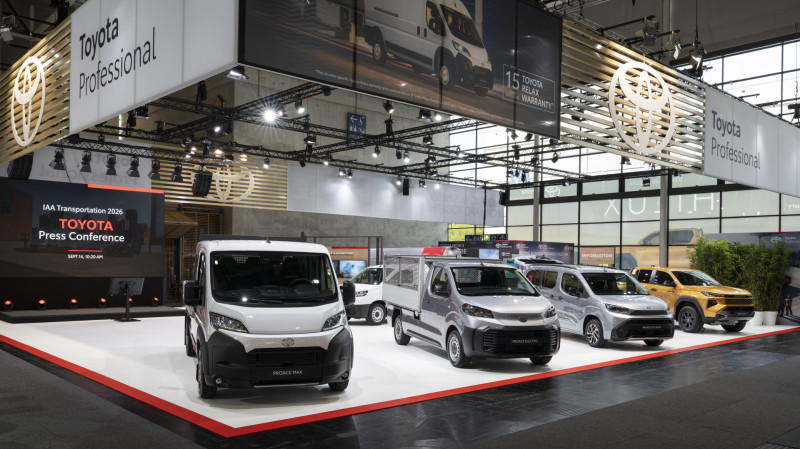
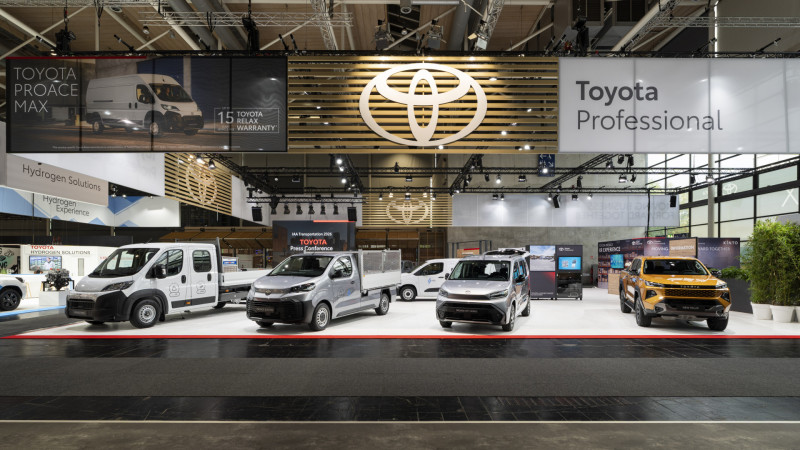
Today, Toyota offers models in all the principal LCV segments, including compact, medium and heavy-duty PROACE vans, people carriers and the legendary Hilux pick-up, recently making its debut in an all-new ninth generation.
Towards 2030
Toyota is targeting further strengthening of its European LCV market performance, based on the three pillars that have supported its growth to-date. By 2030 it aims to achieve 200,000 Toyota Professional sales and an 8% market share.
It will also develop its reputation as an innovator in the segment with the roll-out of new hydrogen solutions with the introduction of the Hilux FCEV in 2028. Early target performance data for this model are a driving range of more than 400 km (WLTP) and the ability to tow loads of up to 2,500 kg.
Till Conrad, Toyota Motor Europe (TME) Executive Vice President, Sales, said: “Scale alone is not success. If quality does not follow this pace, it’s just a number. Real success is measured by consistent standards, strong execution and a network that delivers the Toyota Professional promise every day.”
Electrification and a multi-path approach are key to growth
With the introduction this summer of the all-new Hilux battery electric pick-up, Toyota offers BEV versions across its entire LCV range. BEVs now account for 22% of all Toyota Professional sales, compared to a market average of around 11%. This demonstrates customers’ appreciation of not just Toyota vehicles, but also the quality of service and associated products such as finance and insurance that are focused on meeting their business needs and priorities.
Highlighting Toyota’s commitment to its multi-path technology approach, Till Conrad said: “While our BEV results are strong, we believe the scale of the decarbonisation challenge facing Europe requires every available technology to play a role. Different customers have different operational requirements, which is why there is no single solution for every business. Toyota continues to offer the right technology for the right application.”
Success founded on three pillars
Toyota Professional’s success in achieving sustained growth is founded on three customer-focused pillars.
The first is customer choice: simply put, being able to provide each customer with the right vehicle, the right powertrain and the right package to meet their needs.
Toyota’s multi-path approach increases choice, with different powertrain technologies helping drive decarbonisation while meeting diverse customer needs. Toyota recognises that a single technology solution cannot address the business requirements, mobility needs or the local operating environments of all customers, so its LCVs are offered – according to market and model – with battery electric, Hybrid 48V and diesel combustion engines. The latter include units that can run on renewable fuels such as HVO, contributing to Toyota’s wide-ranging actions to reduce carbon emissions.
The second pillar is Toyota’s commitment to delivering complete service satisfaction, ensuring customer needs and priorities are met. Dedicated business customer support is provided by a network of more than 500 specialist Toyota Professional centres across Europe – a number that has grown by more than 165% since 2019.
Vehicle uptime is critical to business operations, so Toyota helps keep vehicles on the road with express servicing, courtesy vehicles and roadside assistance as part of its new vehicle sales promise*.
Further peace of mind is provided by Toyota Relax, an unmatched service-activated manufacturer warranty programme. On completion of the initial three-year warranty period, all Toyota vehicles – LCVs included – qualify for an additional 12 months’/15,000 km cover – at no extra cost – when they have a qualifying service at a Toyota workshop, up to 10 years or 185,000 km driven.
*Details may vary according to local market.
Convenience and quality are also intrinsic to the third pillar, the provision of a one-stop-shop Toyota Professional ecosystem that gives customers quick and easy access to Toyota products and services to support their vehicle purchase and day-to-day operation. These include Toyota Financial Services, Toyota Insurance Services and KINTO, Toyota’s provider of innovative, sustainable and high-quality fleet and mobility services, including vehicle leasing and fleet management.
Most customers require their vehicle to be customised, whether it’s simply the addition of a business livery or a more complex conversion such as a refrigerated van or tipper body. Toyota makes the process easy and time-efficient by offering both factory and local conversion options. The factory conversions are for industry-standard solutions while the local conversions are carried out by specialist partner businesses working to Toyota-specified standards, providing the customer with a market-specific solution.