Toyota Circular Factory: recycling alloy wheels into new engine blocks
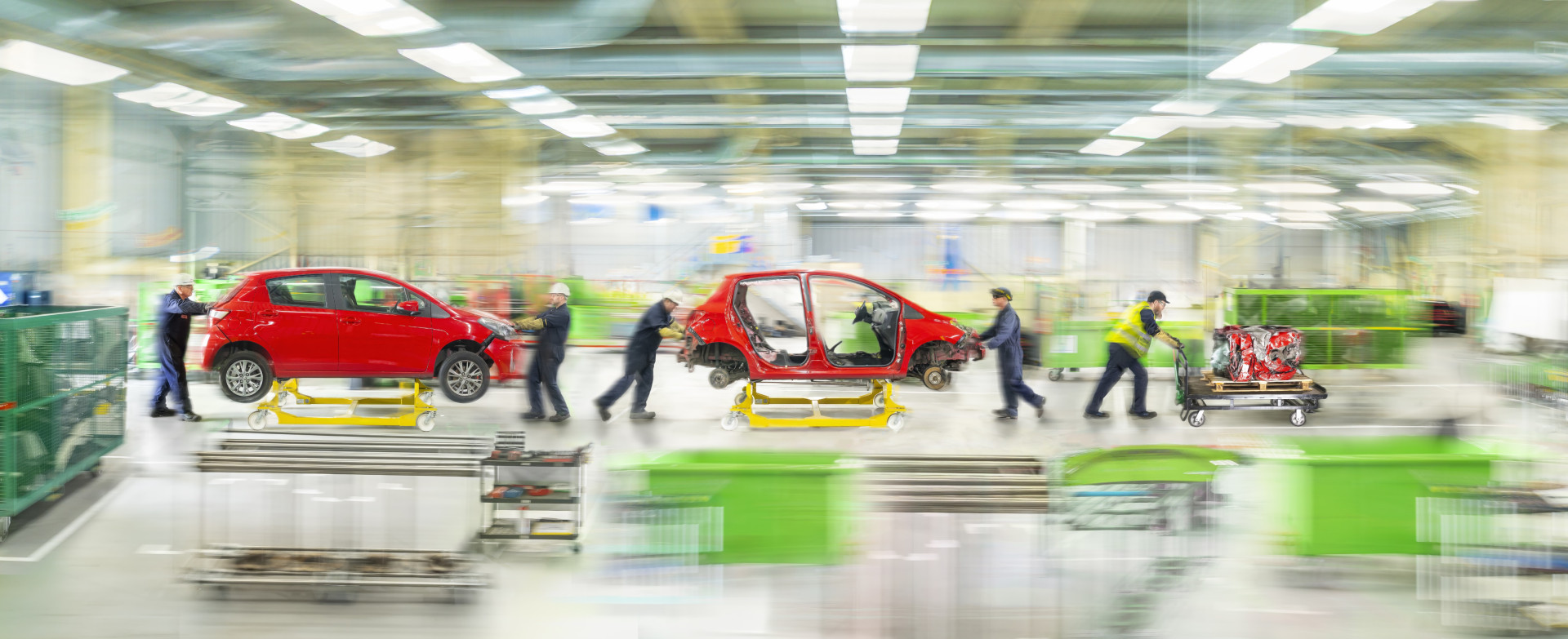
- Toyota Motor Manufacturing UK’s (TMUK) Burnaston plant is home to the first Toyota Circular Factory (TCF)
- TCF recovers aluminium from alloy wheels for re‑use in engine component production supporting TMUK Corolla manufacturing
- New facility explores new processes and opportunities for maximising the re-use, recycling and repurposing of parts and materials from end-of-life vehicles
- TCF gained insights for future vehicle design that will enable easier refurbishment and more efficient end-of-life dismantling
- Processes benefit from the same Toyota Production System methodologies that have transformed global manufacturing efficiency
- Circular approach supports Toyota’s strategy for achieving global carbon neutrality in its products and operations
Brussels, 26th March 2026 – For more than a century, car manufacturing followed a linear path: materials arrived at a factory, vehicles were built, and eventually they reached the end of their life. Today, the Toyota Circular Factory (TCF) is redefining this model, finding practical ways to keep materials in use for longer. One example of this is the aluminium loop now operating in the UK, where alloy wheels recovered at TCF-UK support the production of new engine components.
In Europe, Toyota Motor Manufacturing UK’s (TMUK) Burnaston plant in Derbyshire is home to the first Toyota Circular Factory, a first‑of‑its‑kind project establishing methods and standards for a future network of circular facilities across the region. Building on this progress, a second TCF will open in Poland this year.
At Burnaston, aluminium recovered from alloy wheels at TCF-UK is processed and prepared for re‑use, then supplied to Toyota’s Deeside plant where it is incorporated into engine component production. These hybrid power units then return to Burnaston for installation in new Toyota Corolla vehicles, effectively closing the loop from old wheel to new engine. The first vehicle benefiting from this circular process came off the line on 19th March, marking a significant step forward in Toyota’s ambition to expand the use of recovered, recycled and re‑used materials and parts.
|
|
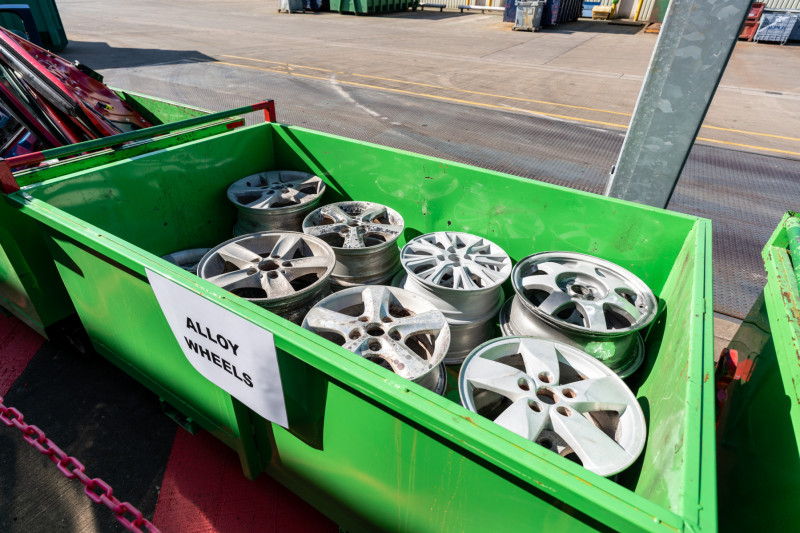
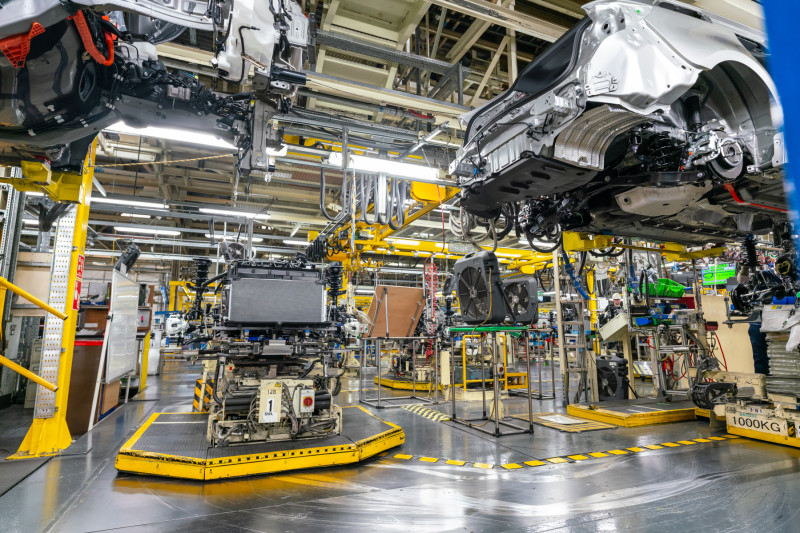
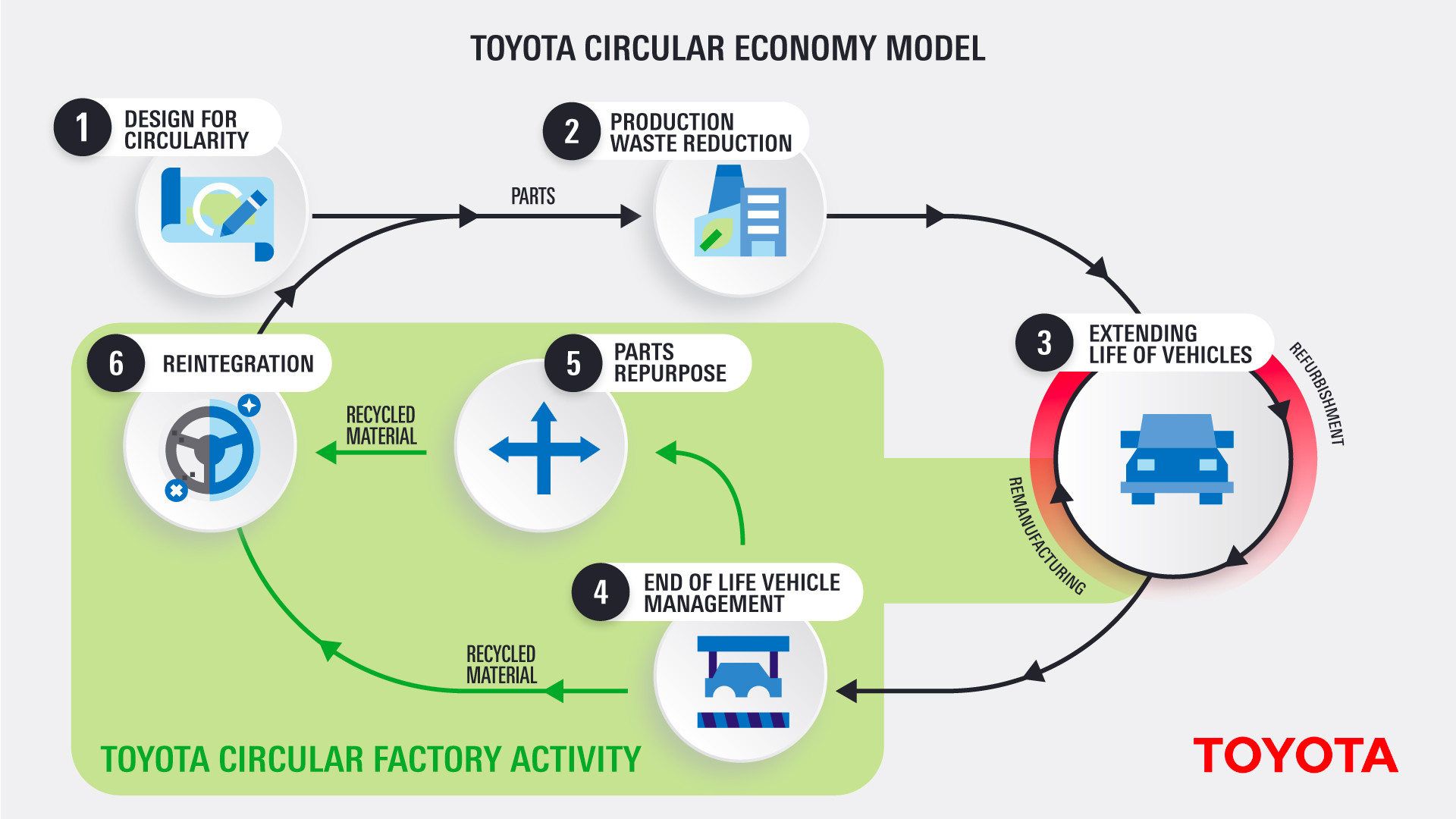
Using Toyota Production System (TPS) principles, the TCF goes beyond optimising the recovery of parts and materials from end‑of‑life vehicles. It evaluates how circular approaches can support more efficient vehicle design, manufacturing and lifecycle management in the future.
Toyota has a proud history of establishing the Toyota Production System, principles that have become the global standard for manufacturing efficiency. Now we are applying the same concept to circularity, designing systems that will help ensure the maximum benefits are realised from end-of-life vehicle feedstock. Ultimately, the ambition is to progressively establish a circular economy model where resources flow through multiple lifecycles, reducing environmental impact, improving material security and supporting Toyota’s long-term environmental commitment.

The importance of circularity today
The TCF directly supports the goals of the Toyota Environmental Challenge 2050, a series of environmentally focused targets announced in 2015 to provide Toyota with a framework for achieving carbon neutrality in all its global products and operations - a status it aims to reach in Europe by 2040. In particular, it aligns with the fifth challenge, the building of a recycling-based society and systems.
The importance of circularity in Europe is increasing with new regulations requiring more efficient recycling and materials recovery, reshaping the landscape of end-of-life vehicle disposal. Toyota sees this as an opportunity to create new industrial models that can deliver greater materials traceability and anticipate future requirements rather than simply meeting them.
Circularity provides a clear, practical approach to keep resources in use for as long as possible, as the highest value.
In practice, the key benefits are:
- Reduced dependence on and use of virgin materials
- Design of vehicles for easier dismantling, re-use and repair
- Extending vehicle lifecycles through safe and standardised refurbishment techniques
- Efficient recovery of materials at vehicle end-of-life
- Returning recovered materials back into manufacturing processes
In the first year of its launch, TCF Burnaston is already delivering excellent results and giving us valuable insights, not just in how we handle vehicle end-of-life processes, but also how we can build circularity into the planning and design of future vehicles. This will enable us to secure even stronger rewards, helping us maximise the potential of the materials, resources and parts we use.
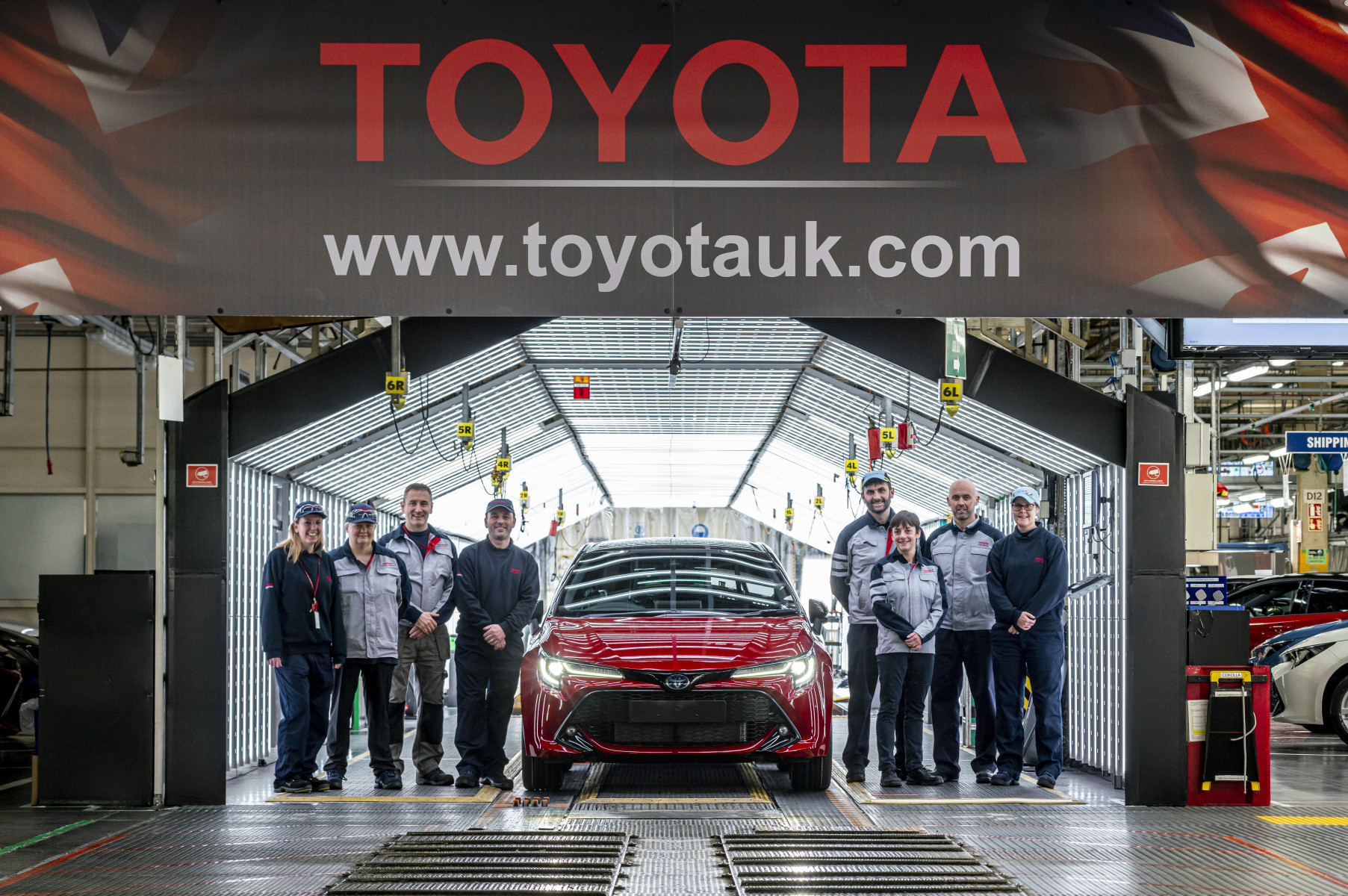
Choosing TMUK Burnaston
TMUK Burnaston was chosen as an ideal location to initiate the circular factory concept as the UK has one of Europe’s largest end-of-life vehicle markets. As it is one of very few right-hand drive nations in Europe, most of the vehicles sold here remain in the country through to the end of their lifecycle. This has led to the development of a mature and highly experienced dismantling sector and learning ecosystem.
Moreover, TMUK was the first Toyota operation in Europe to manufacture hybrid vehicles, putting in place a strong foundation of manufacturing expertise and technical know-how. Since the start of operations in 1992, Burnaston has produced more than five million cars and has already embedded a number of circular processes within its drive for environmental excellence, including recycling streams and the use of recovered materials. For example, aluminium recovered from car wheels at TCF-UK is recycled into new engine casting at TMUK’s Deeside plant in North Wales before being reintroduced on the assembly line at the Burnaston plant.
Step-by-step process
TCF Burnaston operates a step-by-step process for handling end-of-life vehicles which covers not just their dismantling but also analysis of how recovered parts and materials can be reintroduced into the circular manufacturing concept. And it isn’t just Toyota and Lexus vehicles that are handled: models from multiple brands are processed, giving broader insights into dismantling methods, the composition of different materials and different real-world vehicle experiences.
It differs from established dismantling operations in that it benefits from the same Toyota Production System methodologies that have transformed global manufacturing efficiency. Effectively these are being applied “in reverse” to maximise circularity efficiency and results.
The first stage involves the controlled deployment of airbags to ensure safe handling before dismantling begins. Throughout the dismantling process, all fluids and gases are then carefully removed using compliant, monitored procedures.
Next comes standardised dismantling, carried out by trained technicians who bring their Toyota manufacturing experience to the task, applying familiar assembly methodologies in reverse.
The recovered materials are then sorted and classified, with careful separation of metals, plastics and mixed items for efficient downstream processing.
This enables early-stage research into how these can be repurposed and identification of pathways to bring them back into the manufacturing value chain. Learnings are also gained into how materials behave, their durability and how easy or difficult they are to access in the dismantling and recovery process.
In the longer term, this will help inform the design of vehicles that are easier to repair, dismantle and manage at the end of their lifecycle. TCF’s structured reverse manufacturing provides a feedback loop into Toyota’s product designing, helping the company progress towards establishing systems in which resources can be re-used with maximum efficiency.
Alongside dismantling, the Burnaston site has also introduced vehicle refurbishment to safely and consistently extend a car’s lifecycle. Each refurbished vehicle is assessed, graded, and validated to Toyota standards, drawing on the plant’s established manufacturing and quality-control expertise.
Future plans
Following the launch of the first TCF at TMUK Burnaston in summer 2025, Toyota has already announced a second location in Europe at Toyota Motor Manufacturing Poland’s Wałbrzych plant, the next step in building a regional network of circular operations with the potential to go beyond Toyota’s own activities and contribute to the wider manufacturing ecosystem.
Toyota Motor Europe NV/SA (TME) oversees the wholesale sales and marketing of Toyota, GR (Gazoo Racing) and Lexus vehicles and parts and accessories, as well as Toyota’s European manufacturing and engineering operations. Toyota directly employs over 26,000 people and has invested over EUR 12 billion in Europe since 1990. Its eight European manufacturing plants are located in Portugal, the UK, France, Poland, Czech Republic and Turkey. Today, there are approximately 15. 6 million Toyota and Lexus vehicles on European roads, whose drivers are supported by a network of 28 National Marketing and Sales Companies and around 2,300 retail sales outlets in 53 countries (EU, UK, EFTA countries , Israel, Turkey and other Eastern European countries). In 2025, TME sold 1,229,000 vehicles in Europe for a 7.2% market share. For more information, visit www.toyota-europe.com.
Toyota believes that when people are free to move, anything is possible. In the pursuit of "Mobility for All", Toyota aims to create safer, more connected, inclusive and sustainable mobility to achieve its mission of producing “Happiness for All”. In Europe, TME launched the KINTO mobility brand which offers a range of mobility services in 20 countries, and is growing its business-to-business sales of fuel cell products and engineering support. Contributing to the UN Sustainable Development Goals, Toyota is working to achieve carbon neutrality in its entire business across Europe by 2040.